Making Maths fun and modifying the context in which children are using their numeracy skills is something that Nicole has introduced to her class this year. Nicole has engaged her students by creating a number of variables that can be manipulated to challenge students. She has used the idea of the dartboard and the areas where the score is doubled and tripled. Velcro balls act as the 'darts' and students throw the ball at the wall that starts the calculations. The first activity today has been to double or triple the outer number, then adding all the numbers together. Functions can vary, as can the numbers around the outside of the target. "Triple Tuesday" will run as a regular activity in Maths.
Recently, I took the opportunity this week to reconnect with Frances Valintine, founder of the Mindlab in Christchurch. I was keen to hear how her view of technology and innovation had changed since my last encounter with her two years ago. I was not disappointed and her words rang true and reinforced how we need to be rethinking what is possible.
Frances reiterated that technology should be used as a tool and not purely for consumption. It is a tool that allows for the creation of content and in developing the creativity. In schools, we need to be mindful that apps are great tools that allow our students to create content, but apps do not necessarily teach children to learn the skills that are required for the future.
In the past, looking to the future we had a linear view compared with what we now face which is an exponential future that is unpredictable. We are all challenged by this and we need to move to face the fast-changing world ahead of us. We often talk about “the future” as if its ahead of us but it’s here, right now!
We live in a Global world so we need to think globally, even though New Zealand is a small country and we only contribute a slither to the world’s economy. We can examine our economy at a micro level within our communities and in NZ, and at a macro level which looks at what’s happening in the world. Why is technology important to New Zealanders? It ranks the third highest in returns of our GDP behind our primary industries and tourism.
Take a look around, technology underpins all jobs today, tomorrow and in our future.
We live in a data-rich world. Technology is augmented in almost every job and yes, there are jobs that are more efficiently being completed by robots. These jobs may be disappearing from the list of what our students might be applying for but there is also a new list of jobs titles that are being introduced to the job market. These new jobs may look like nothing we have ever envisaged in the past but the transference of skills to these new jobs will be essential for future job seekers. Are we as teachers upskilling our students to have the skill set that enables our girls to transfer their skills into these newly created jobs?
Imagine if you had no access to technology? How would you check the weather? See the news?
Is NZ training people with the right skills as technology is underpinning every workspace? Is New Zealand lagging behind the rest of the world and has the change hit us yet?
The internet has meant that information is available to all globally and unfortunately, New Zealand has had a decline in productivity compared to other nations. Agritech in Israel is booming yet NZ has been slow to react. Think about it . . . Israel doesn’t have fertile land, yet they are ahead of NZ in adopting and developing in the agritech sector.
Our children under the age of 13 years are wired differently. They don’t know about the analogue world that existed when I was a child. Some will have never been into a bank, they may not even understand the function of a bank!
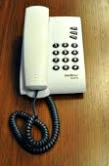
If the phone was ringing, wouldn’t you think that they would answer it? Not so . . . because how would they know who was calling?
These children, when put in a room to complete a task, will want to talk, to consult with each other, to problem solve, and they work quickly in short bit size chunks. They will often want to know why they have to complete a task in a specific way.
In the digital world there are many ways to get to the end outcome - as teachers should we continue to manipulate the learning journey to the achieve the end result or are we better to guide the learning depending on how which way the child takes?
How do our students communicate beyond the school gates? It’s not by the use of emails! Yet this modality of communication continues to be the primary platform for teachers and schools. There are a multitude of platforms that our younger population are using - Trello, Slack, Instagram, Snapchat, Facetime, Hubspot, Sharepoint etc., This begs the question then, why do we limit what we use for learning in schools?
Have you asked a primary school student about an iPod? They may correct you and think you mean iPad. iPods are old technology! What about cashless banks? This almost seems an oxymoron. Generation Z is the 19-year-old age group. They have an appreciation and can relate to the world I grew up in during the end of the 20th century. Frances described this group as having “a small rear vision mirror to look back through and a huge forward facing screen.”
Technology has positive benefits but it also can have negative benefits. The “Fortnite” online game is having a massive negative effect on children and young adults. There is now a leaderboard offering thousands of dollars as daily rewards. Credit Cards are being used to fund online rewards at $20/day or more. Children and young adults are sleep deprived.
Explaining to children why screen time should be limited is crucial. When online, you cannot unsee things you accidentally see on the internet. Taking precautions and setting up rules in our homes such as turning off the internet after a specific time, is to help children manage their device and to promote good sleep patterns.
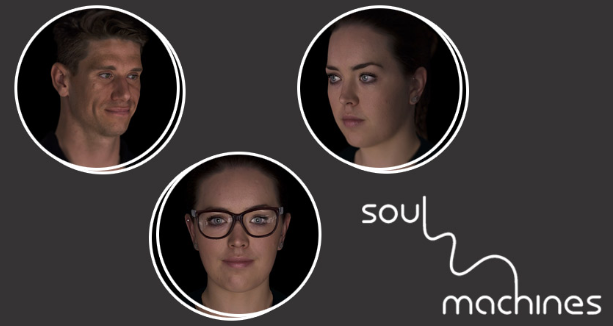
Have you ever had a conversation with an artificial intelligent machine? Soul machine artificial intelligence technology (ai) is here.
Most children under 13 years are happy to engage with a human looking ai. New Zealand developed technology in this field has been developed to be emotive and to relate to humans. This augmentation of the robot into a human form has allowed for the learner to learn faster and to continue to learn beyond foundation knowledge and skills.
Are they substitute teachers? Possibly, but imagine going beyond the basics and learning more talking with a machine when the human teacher is unavailable?
So what? What is your “and/&”?
Frances challenges us to clarify what your “AND/&” might be.
Whatever we have learnt in the past is of value to us but
we now need to take all of this AND AUGMENT!
We need to be sharing resources rather than build spaces. ‘Social bump’ spaces are wifi places that anyone can congregate to work and learn. These are shared spaces that don’t have a specifically designated purpose. School is but a fraction of a young person’s learning. NCEA has now recognised this through micro-credentialing. What we learnt in the past may no longer be relevant so reinventing and being flexible and adaptive is what we need to empower in our girls. We live in a world where knowledge and information are readily available to us. We “Google” and “YouTube” if we need to find out how to do something.
A personal story Frances shared was about her own son who had a dream to fulfil a job that doesn’t currently exist. He sought chunks of knowledge to create his own credentials to be an expert in the internet of things in residential homes. This meant that he embarked on short courses to gain knowledge in architecture, building, and electrical engineering.
Learning a bit of information just in time for a specific purpose is what we face daily. The need for retaining information no longer elevates you over others. The ability to use the information and rethink what is possible is what is now considered more valuable.
Can we do better to prepare our girls for tomorrow?
Factfulness Hans Rosling - looks at the state of the world
Mindlabkids.com. Online learning activities for kids for at home and school
How happy would you be to realise that you are chatting to a "robot" / "machine"??
Does it matter?
Do you feel deceived?
Do you accept that this could have happened to you yesterday or will occur later today?
A Celebration of Student Learning
Y2 students teach their parents how to be computer scientists.
First, they taught them how to code a pattern. They explained a set of instructions is called an algorithm and finally taught their parents how to debug their mistakes. The resounding response from parents was that they were amazed their children could write code!
Identifying rotation, reflection, translation and tessellation in this example
Part of the next Maths unit at year 7, the students are applying their knowledge of geometric concepts. The students will create their own logo to demonstrate translation, tessellation, rotation and reflection. We will be using Google Draw to create a vector drawing (SVG file) and then we will be able to laser cut these logos.
This year the Robocup event took place just over the fence at Selwyn House School.The week leading up to the competition is always tense and comes around way too fast.
Robots are programmed and tested extensively in preparation to face students from other schools.No matter how well planned each team is, there always seems to be gremlins on competition day.Last minute changes are inevitable. Being able to debug and find the problem, then to fix the errors are part of the ongoing cycle for the day. Students entered in the search and rescue section, face four rounds with different challenges. Completing the route under the two minute time limit adds pressure for the participants.
Students who opt to enter in the theatre section face an interview panel to explain their process. Teams then have two minutes to perform. This can involve robots that tell a story with music and props. Students might narrate, dance, act alongside their robots and be dressed in costumes.
Both of these sections we entered in this year by St Margaret’s girls.
Congratulations:
Steminists: Year 12 student Holly Macdonald, and Year 11 students Mia Wright and Hattie Compton-Moen who finished
1st in Premiere Theatre with a story line of Romeo and Juliet.
The Mockingjays: Year 8 students Tessa Sitjes and Mia Fraser achieved 2nd in the Senior Search and Rescue competition.
Tessa is praying to the robot gods that her robot is going to behave and do what's it's been programmed to do
This competition provides students opportunities to develop a range of skills. Beyond learning to programme their robots they also have to manage their time, problem solve, communicate effectively, share roles and responsibilities and work in a team. Patience and perseverance are severely put to the test. These girls are now considering Robocup Nationals in Dunedin in mid September.
A massive thank you to Anna Ross our Robotics tutor. If any students want to join the Robotics Club and have a go, this runs Tuesday after school and Friday period 5.
Mockingjays take out 2nd in the Senior Search and Rescue